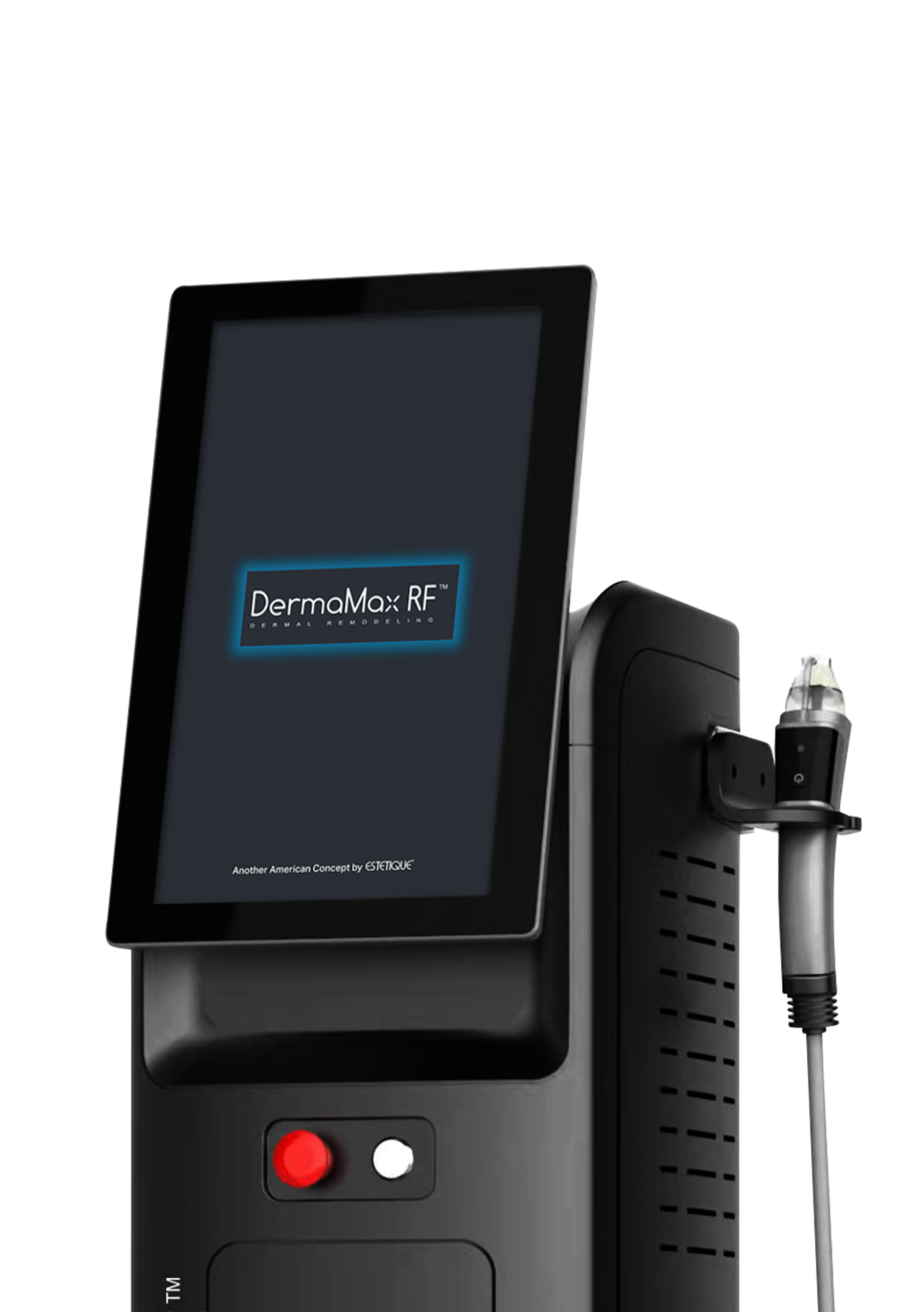
Most explanations of RF skin tightening stop at "it heats the tissue," which is technically true and completely unsatisfying. Here's the fast, straight version — what LipoMax RF actually does, who it's for, and what to tell a patient who wants more than a shrug.
First, the quick intro: LipoMax RF is Estetique's FDA-cleared, USA-made radiofrequency platform, used by med spas and clinics for skin tightening on areas like the abdomen, flanks, thighs, and arms — non-invasively.
The short version
RF stands for radiofrequency — electrical current that generates controlled heat as it passes through tissue, triggering the skin's own collagen response. Most devices on the market are monopolar (one electrode, heat travels to a distant grounding pad, deeper but less controlled) or bipolar (two electrodes close together, more surface-level and more precise, but limited to a small treatment zone at a time). LipoMax RF is multipolar — several electrode pairs working at once, spreading heat evenly across a wider area in a single pass instead of relying on one narrow path between two points.
That's the whole reason it's built for full-area skin tightening rather than small spot treatments: a monopolar or bipolar device has to be walked slowly across the skin in overlapping passes to cover the same ground a multipolar handpiece covers in one. Fewer passes means more consistent heating, and more consistent heating is what actually drives the result — not just more energy delivered overall.
What the heat is actually doing
Sustained warmth in the right range does two things, on two different timelines. First, it gets existing collagen fibers to contract immediately — that's the visible, same-day tightening effect a patient notices walking out of the room. Second, and more importantly for the lasting result, it triggers fibroblasts in the deeper skin layers to start producing new collagen and elastin over the following weeks. The immediate contraction fades; the new collagen production is what actually holds.
The trick is staying in that effective range consistently, across the entire treatment area, pass after pass — not too cool to do anything, not so hot it's uncomfortable or risks the skin. That's exactly what LipoMax RF's real-time temperature monitoring is built to do: it reads tissue temperature continuously during treatment rather than relying on a preset timer, so the device is actually responding to what's happening in the skin instead of guessing.
Who it's for
Good candidates are patients with mild-to-moderate skin laxity looking for a non-invasive tightening option — someone who's noticed skin isn't quite as firm as it used to be, but isn't looking for a surgical result. It works across the full Fitzpatrick range (I–VI), which is a real differentiator versus laser-based tightening options: RF doesn't rely on targeting melanin the way lasers do, so it doesn't carry the same restrictions or added caution for deeper skin tones.
It's also a low-friction addition to a treatment menu, because it doesn't compete with what a practice is probably already offering. Patients booking injectables or facials are frequently also candidates for skin tightening, and it's an easy adjacent recommendation rather than a separate sales conversation.
What it looks like
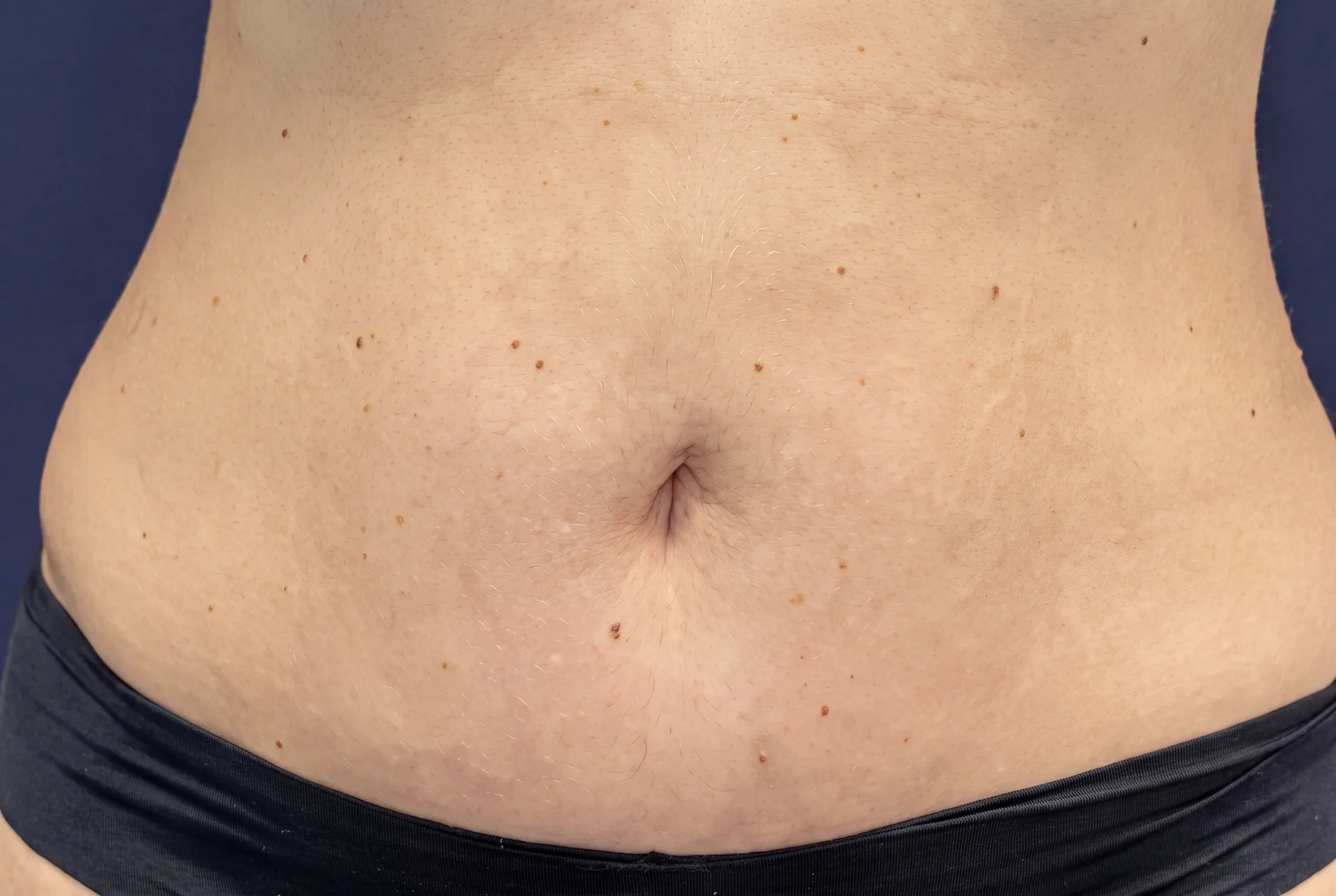
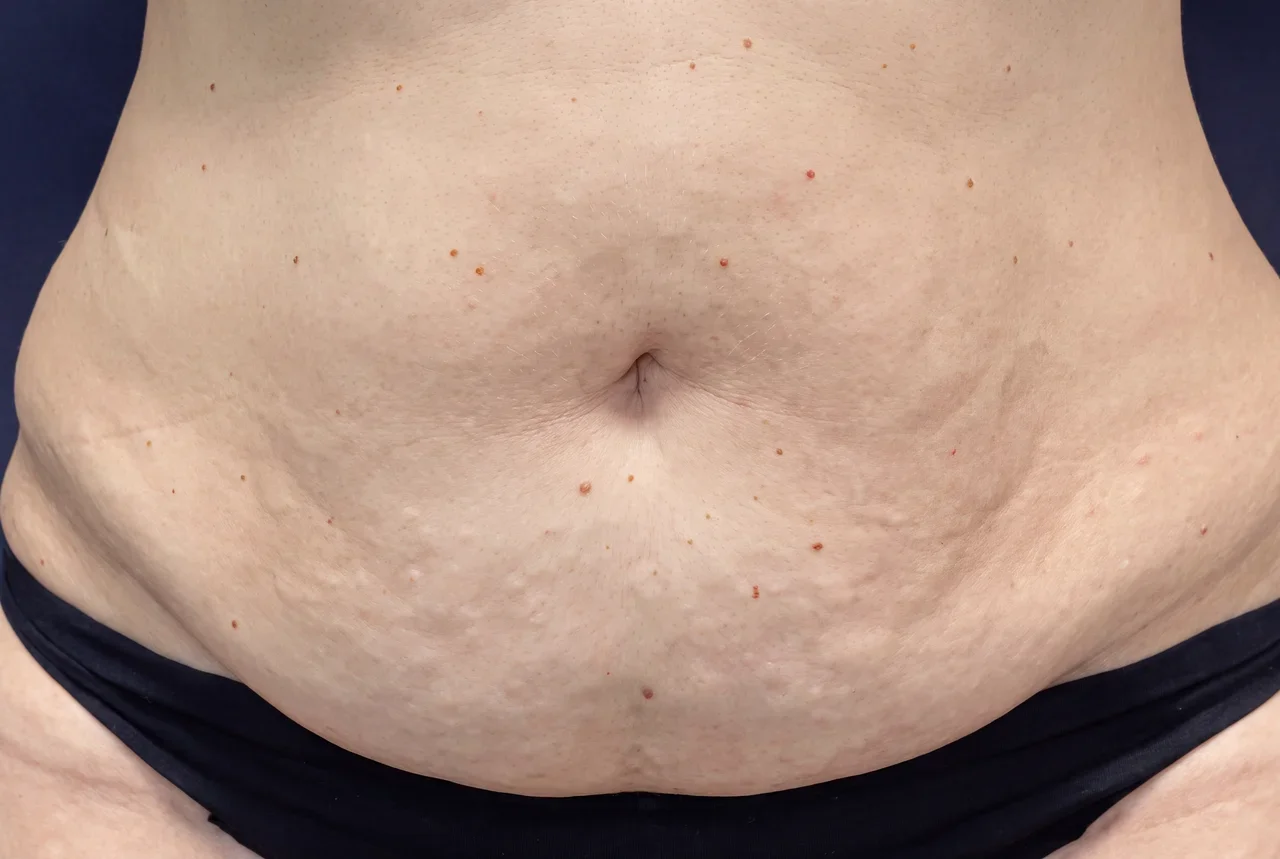
Drag the slider — this is skin tightening from LipoMax RF, before and after.
What to actually expect
Results build over weeks, not overnight — new collagen doesn't form in a day, and setting that expectation with the patient up front matters more than it might seem. A patient who's told "you'll see initial tightening today, and the real change builds over the next several weeks" is a happier patient with the exact same outcome than one who assumed a single session would look final. A full course of sessions beats a single one for anyone with more than mild laxity, and periodic maintenance sessions afterward keep results going — collagen production isn't permanent, it's an ongoing process the treatment kicks off.
Why practices like it
No downtime is the obvious one — patients can book a lunch-hour appointment and go straight back to work, which removes the biggest booking objection most non-invasive treatments face. Beyond that, it packages well as a series rather than a one-off, which patients and your books both prefer: a multi-session plan is a better patient outcome and a more predictable revenue stream than a single transaction. It also tends to feed surgical referrals rather than compete with them — plenty of patients "graduate" to considering a surgical option only after trying a non-invasive one first and liking the direction, not the other way around.
Bottom line
So that's the real answer to "what does RF actually do" for skin: controlled heat, consistently applied, triggering an immediate tightening effect and a longer-term collagen renewal process underneath it. LipoMax RF is built specifically to make that consistency easy to deliver, with multipolar coverage that spreads energy evenly instead of relying on one electrode pair to do all the work, and real-time monitoring that keeps every pass in the right range without anyone eyeballing it. It's FDA-cleared and made right here in the USA — not a footnote, a design choice worth pointing to when a patient asks why it's worth trusting over an unfamiliar import. Full specs live on the product page, or just come see it running in person.
See LipoMax RF specs
Book a live demo and see the multipolar coverage in action.